

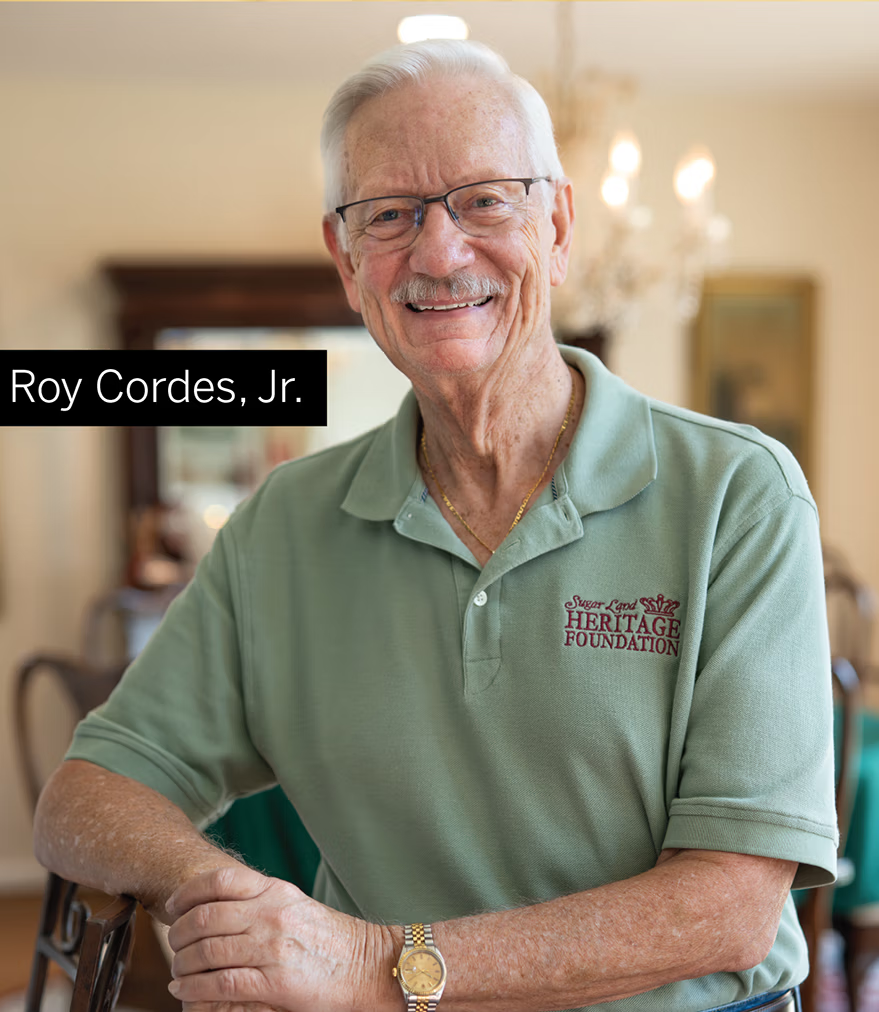
 You may recognize the Cordes name if you live in Sugar Land. Over the years, father and son have helped shape the city into what it is today. Roy Cordes, Sr. was Sugar Land’s mayor from 1972 through 1981 after also serving on the City Council. His son, Roy Cordes, Jr., followed in his father’s footsteps and was also a member of city council from 1981 through 1990. He then became a county judge and worked as Deputy General Counsel for the most Sugar Land of Sugar Land companies, Imperial Sugar Company.
Roy Cordes Jr.’s late wife, Helen, also left her own mark helping her Sugar Land neighbors – she is the namesake behind the Fort Bend Regional Council on Substance Abuse, Inc.’s award, presented for a dozen years, honoring her generous community spirit and community achievements.
“Growing up and seeing my dad and his friends so involved in our community developed my personal desire to give back to the residents of Sugar Land,” Roy Jr. says. “My father’s and my shared goal was to always try to leave things better than before you got there.”
Roy currently sits on the board of the Sugar Land Heritage Foundation, charged with the mission of researching, collecting, preserving, and communicating the history, culture, and values of the Sugar Land community, and to help guide the community toward its future. In turn, Roy has a wealth of information to share.
“I’m a second generation Sugar Land native. Mom was born in Sugar Land and Dad moved here in 1939 with his family,” Roy explains. “Other than the years I was in the Air Force and college, plus a short stint in Beaumont working my first job out of law school, I’ve lived my life in Sugar Land. My mom, who is 101 years old, still lives on Oyster Creek. I attended Lakeview Elementary, Sugar Land Junior High School, and Dulles High School.”
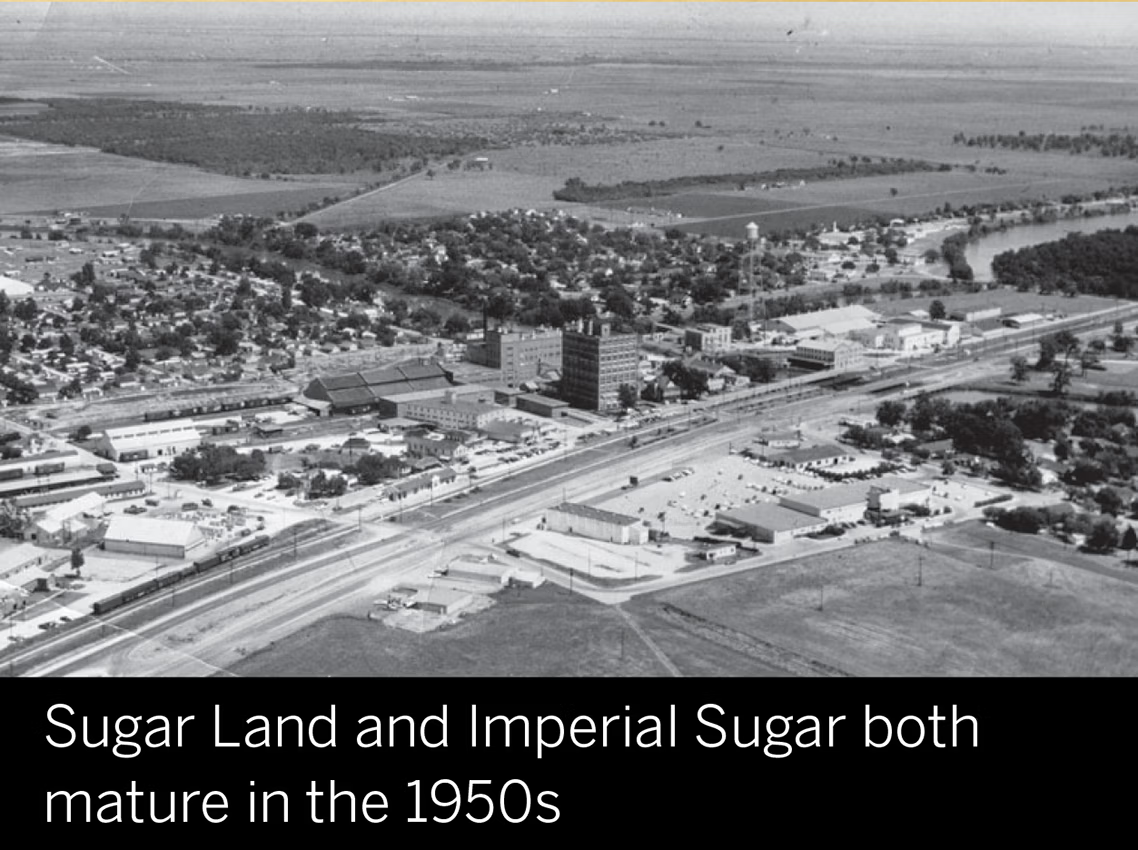 He spent his early professional years working for corporations before becoming a public servant. “I saw a lot of growth when I was on the City Council. In 1981, our population was only around 8,000 people. By 1990, the population had grown to almost 25,000 people,” he says. “The development of First Colony during the 1980s, a community that sits on land that was a part of the Stephen F. Austin and Williams land grants in the 1820s, contributed greatly to the increase.”
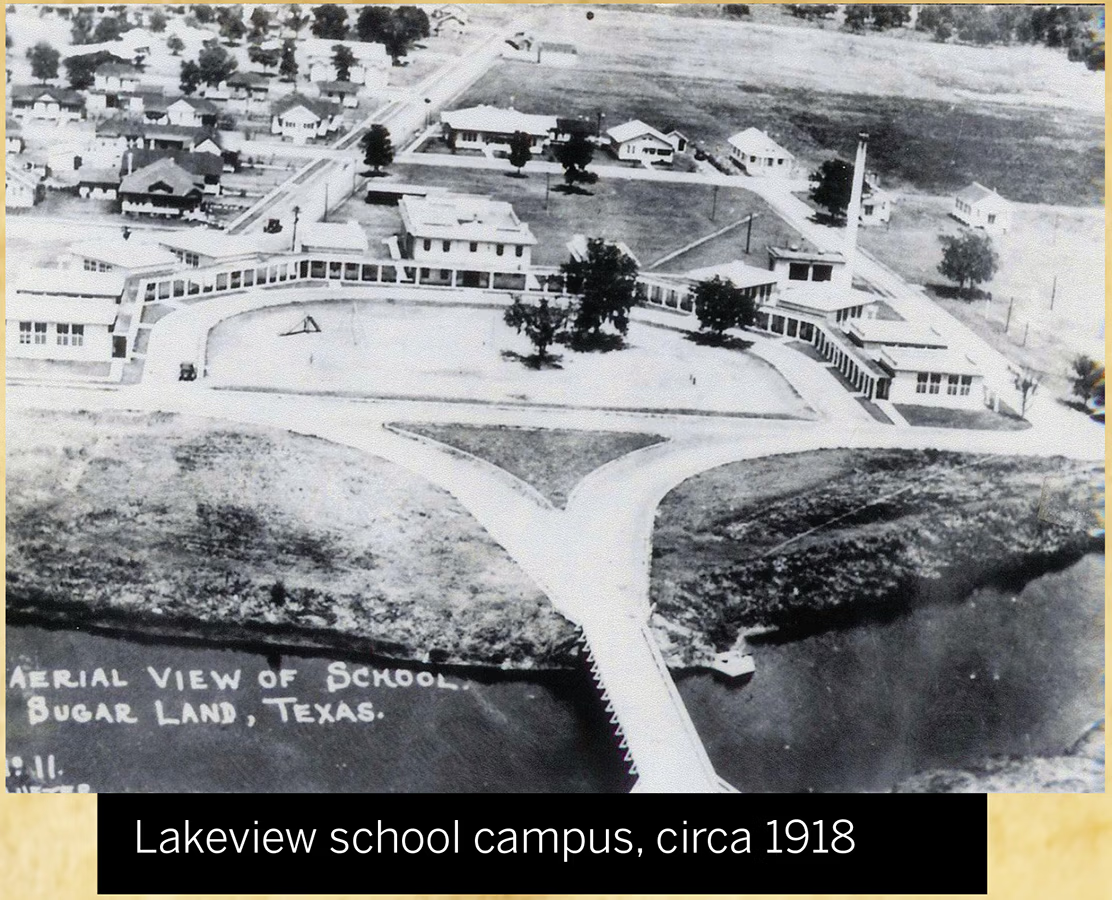
Back in the early 1900s, Sugar Land started as a company town. “The city started very small, with about 100 people,” Roy says. “When W.T. Eldridge and Ike Kempner took over Imperial Sugar, they developed Imperial into one of the first planned communities in the area. They brought housing, a medical clinic, schools, a hospital, and stores into the city. Imperial’s subsidiary, Sugar Land Industries, developed the neighborhoods of The Hill, Mayfield Park, and the homes along Brooks Street.”
 Dr. Don “Doc” Hull and his wife, Jenny, founded Hull Field in 1953, which is now the Sugar Land Regional Airport. The original 3,200-foot asphalt runway at the Sugar Land Airport was built in 1963, and it was later replaced with an 8,000-foot reinforced concrete runway in 1985. “The airport has had a huge impact on the growth of the city,” Roy says. “It started as a grass runway before the asphalt was laid in 1963.” Today, the airport sees about 120 take-offs and landings every day.
“People from my generation had a DQ, one restaurant, and one theatre,” Roy laughs. “But today, Sugar Land is a diverse, cultural, and historic place to call home. It is a city with a lot to offer – job opportunities, a good family atmosphere. It’s a well-run city that’s maturing every year. Our current population is around 107,000 residents.”
Today’s Sugar Land offers master-planned communities with a small-town feel. It’s culturally progressive with several museums, like the Sugar Land Heritage Museum, Art Museum TX, and the Houston Museum of Natural Science at Sugar Land. You get performing arts with the Smart Financial Centre and Crown Festival Park. It has restaurants and shopping to cater to the city’s diverse ethnicities and cultures, topped off with great schools and educational support businesses. It’s a place you can make an investment on a home – a place you’ll live for decades.
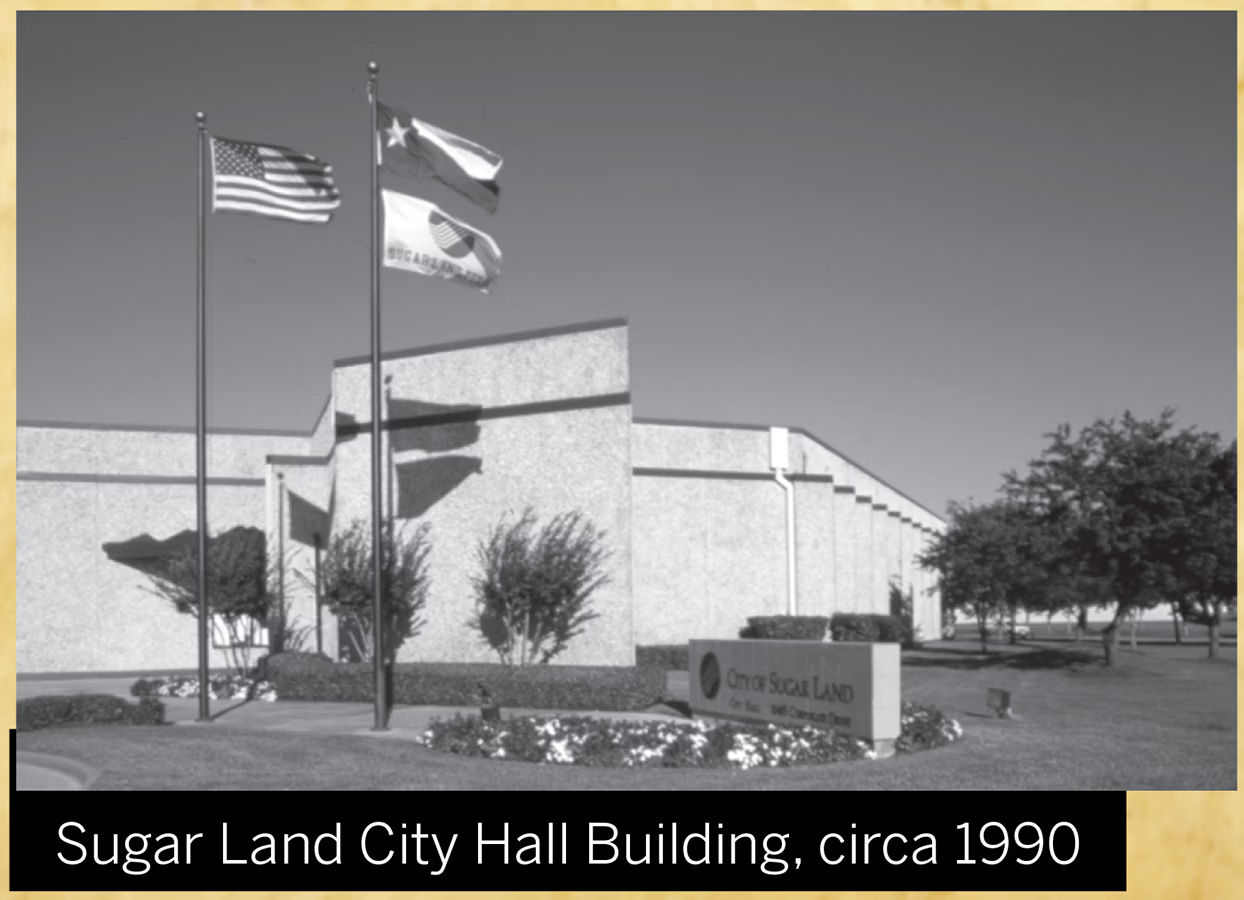 “Over time, as Sugar Land has grown, it’s embraced ethnic and cultural diversity. It’s one of the things that brings strength to our community,” Roy says. “The city has a good track record of growing positively and working with everyone, making it a great home with everything a resident could want in their community. It’s a phenomenal place to grow up.”
Cathy Stubbs Team
281-967-6149
cathystubbs.com

- The food was absolutely exceptional, particularly the goat biryani, which was rich in flavor and beautifully spiced. Each bite was a delightful experience, showcasing the chef's skill and attention to detail. Additionally, the service we received was outstanding; the staff was attentive and ensured that our dining experience was enjoyable from start to finish. Overall, a fantastic representation of Pakistani cuisine!
- Great article and extremely thankful for the generosity of Classic Elite and for all they do in our community.
- Beautiful article! Thank you for including me.
- What is dr parish’s portal
- Informally introduce to Robin Anthony 'd (Renu Herbs) haven't tried yet but will. Is it recommended to give to children? What is the requirements or are there any? Concerned and interested person. Thanking you 🤗 in advanced. Victoria Moore
- Concierge Jewelry has been my #1 go to for EVERYTHING! I’ve had repairs done in such a short time, jewelry designed as one-of-a-kind pieces that are exceptionally made & her diamond selection is like no other!!! Rose is and has been the most honest, trustworthy and knowledgeable person & I will continue to be her customer and friend for life!
- Loved it and have 2 reservations coming up! We love the new addition and the warm atmosphere! Service is impeccable and the food is beyond wonderful! Perfection!
- So can I take organic tea leaves alone with colon Capsules together?
- Nice article Dr. Lomonte! We will try to attend the event! We appreciate what you and the Optimist Club do to help our community's young people!
- Just had it PCT for the first time Amazed!!! Delicious food friendly staff great atmosphere!!! Definitely will be bAck with more friend and family!!!
- Love love love PCT! The atmosphere is friendly and welcoming and the food and drinks are top notch! Can't get enough!
- Thanks so much to Classic and to Gina !
- Sharlene's live and caring knows no boundaries. God bless her always for giving of herself TO so many FOR so many❣
- All true these loving comments. These and more. Sharlene a strong. Independent woman who has made her own way in life and accomplish e's what she sets out to do.
- Dr Humble + LaDonna Marie = Perfection!
- I have seen Jonathan speak again. Brilliant! Am I missing the date?
- Steph, I really wish you more success bro. Very proud of you 👍🏽
- What a great article Gina. Thank you.
- This is awesome!! And very impressive :-)
- This is one of the most Patriotic Families I ever had the opportunity to know!
- Wow! What a wonderful ad for this boutique realty co.; I think it is straight forward and sharp! I would love the opportunity to work with all of you; Nelvin it was great having you at Riverway Title recently. Bonnie Platter 281 788 4887
- We had Bugco at the house again today for my quarterly treatment. The young men were very professional and nice. When they treated the outside to my delight they knocked down the wasp nests and cleaned under the eve's with brooms. Since we are up in years and difficult to keep the outside clear of webs, etc. this was a really great service. I highly recommend Bugco.
- Great testament to living a life of purpose...keep up the great work.
- Sharlene deserves all these tributes, she is truly a wonderful loving person.
- Sharlene is an awesome woman and truly has a heart of love. I experienced that the first time I met her!
- We come from Greatwood to eat at Dekkers OFTEN - LOVE IT!!!
- I love Dekkers! Awesome food.
Archives
- February 2026
- January 2026
- October 2025
- September 2025
- August 2025
- July 2025
- June 2025
- April 2025
- March 2025
- February 2025
- January 2025
- December 2024
- November 2024
- October 2024
- August 2024
- July 2024
- May 2024
- February 2024
- January 2024
- October 2023
- September 2023
- August 2023
- July 2023
- June 2023
- May 2023
- March 2023
- February 2023
- January 2023
- December 2022
- October 2022
- September 2022
- June 2022
- May 2022
- April 2022
- February 2022
- November 2021
- October 2021
- September 2021
- August 2021
- July 2021
- June 2021
- May 2021
- March 2021
- February 2021
- October 2020
- September 2020
- August 2020
- July 2020
- June 2020
- May 2020
- February 2020
- January 2020
- November 2019
- July 2019
- June 2019
- February 2019
- November 2018
- October 2018
- September 2018
- August 2018
- July 2018
- June 2018
- May 2018
- April 2018
- March 2018
- February 2018
- January 2018
- December 2017
- November 2017
- October 2017
- September 2017
- August 2017
- July 2017
- June 2017
- May 2017
- April 2017
- March 2017
- February 2017
- January 2017
- November 2016
- October 2016
- September 2016
- August 2016
- June 2016
- May 2016
- April 2016
- March 2016
- February 2016
- October 2015
- September 2015
- August 2015
- July 2015
- June 2015
- May 2015
- April 2015
- March 2015
- February 2015
- January 2015
- December 2014
- November 2014
- October 2014
- September 2014
- August 2014
- July 2014
- June 2014
- May 2014
- April 2014
- March 2014
- February 2014
- January 2014
- December 2013
- November 2013
- October 2013
- September 2013
- August 2013
- July 2013
- June 2013
- March 2013
- February 2013
- January 2013
THE MAGAZINE


